Simply put, tracking aortic disease is challenging. Tracking and processing of imaging data for patients with aortic dissection or aneurysm has historically presented significant challenges due to the absence of standardized practices, effective communication, and streamlined organization. Compounding upon these difficulties, many of these patients have external imaging data originating from sources outside Stanford Health Care, further cementing the motivation for standardized measurements and a robust organizational infrastructure.
Tracking and monitoring aortic size is crucial due risk of rupture at certain thresholds. The Stanford 3DQ Lab delivers this tracking/monitoring with a custom-built ecosystem that standardizes measurements, scheduling, and reporting; which helps surgeons know if and when to intervene to prevent aortic rupture. For surgical options in the aorta, there is a risk of paralysis; surgeons prefer not to intervene until necessary to preserve quality of life.
Achieving the delicate balance between timing, data management, and standardized processes is necessary due to the many participants involved in evaluating and caring for patients with aortic enlargement. Addressing these needs, the 3DQ Lab designed a workflow that facilitates improved care coordination by ensuring standardization on the analysis of the medical imaging, providing intuitive reporting, and scheduling the results to optimize the needs of patients and surgeons. This manifests as new images in the healthcare record and a PDF report that shows changes in aortic dimensions. As of late 2023, nearly 24,000 imaging exams have utilized this workflow among 7,000+ patients.
Below are some of the technical challenges the 3DQ Lab initially faced with these studies, and how our workflow has resolved them.
Standardization
Inconsistencies were observed in the measurements and measurement locations of both external and internal aortic surveillance imaging data. To address this issue the 3DQ Lab developed a standardized protocol for the generation and placement of these measurements, and re-measuring at that exact location in any previous or future imaging studies. This novel standard is now implemented across all internal and external imaging scans, with the 3DQ Lab processing up to 700 external studies annually. In cases where patients return to Stanford Health Care for follow-up treatment, previous instances are reevaluated and remeasured.
Stanford surgeons identified the need for a systematic approach to accommodate their personalized preferences regarding custom measurements and workflows. To address this requirement, the 3DQ Lab developed customized protocols (customized sets of instructions) for each surgeon. This solution empowers surgeons to deliver an elevated standard of care to their patients, enabling them to provide personalized and precise medical interventions based on their individual preferences.
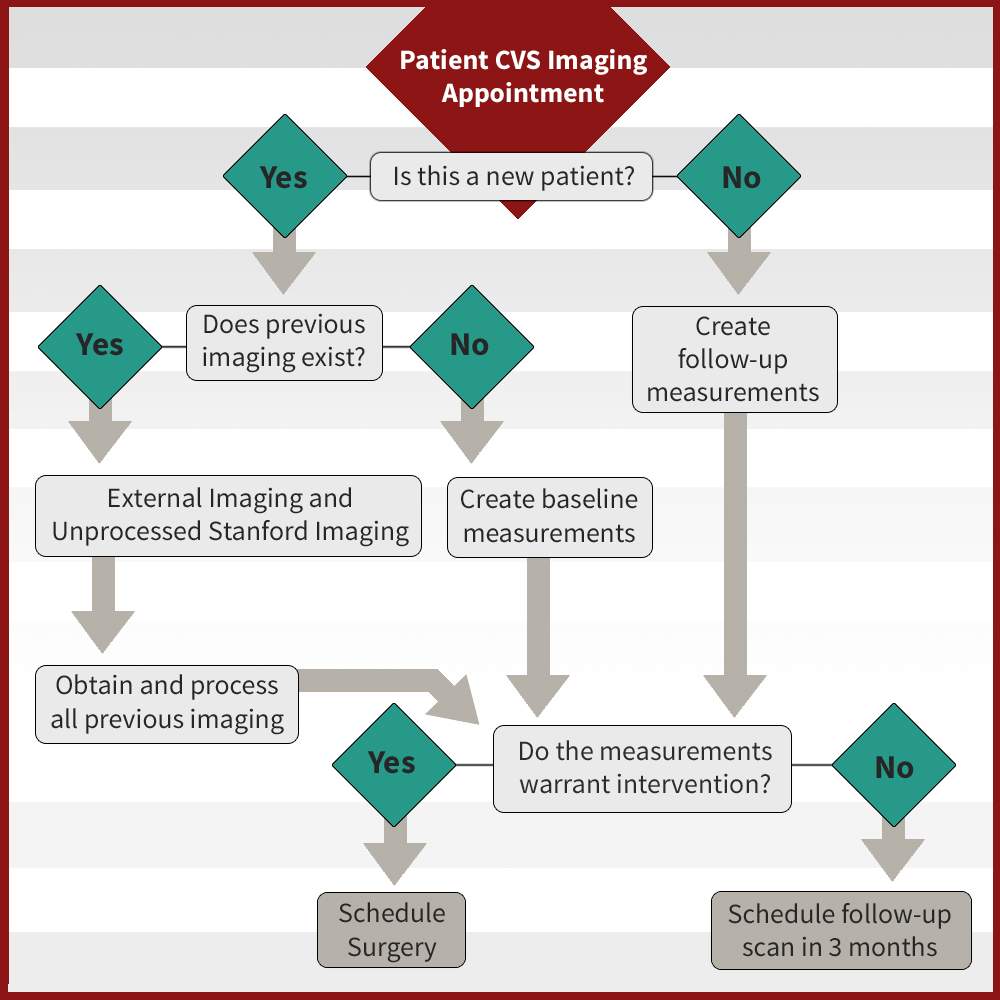
Figure A (Right): The current workflow used by the 3DQ Lab and CVS team for the acquisition and processing of aortic surveillance patients.
Data Management
Previously, patient aortas were monitored and tracked using spreadsheet programs such as Microsoft Excel, which posed various challenges due to data entry errors and limited functionality. Similarly, relying on email for requesting services and receiving results proved to be inefficient and time-consuming. In response to these shortcomings, a custom-built intranet site for Cardiovascular Surgery (CVS web portal) was developed to efficiently request, track, and manage patient aorta data, significantly enhancing the accessibility of information for staff members. As a supplementary measure, a group email system was implemented as a contingency option to ensure effective communication and facilitate necessary updates. Requesting services, receiving results, and prioritizing cases are now all done rapidly through the CVS web portal.
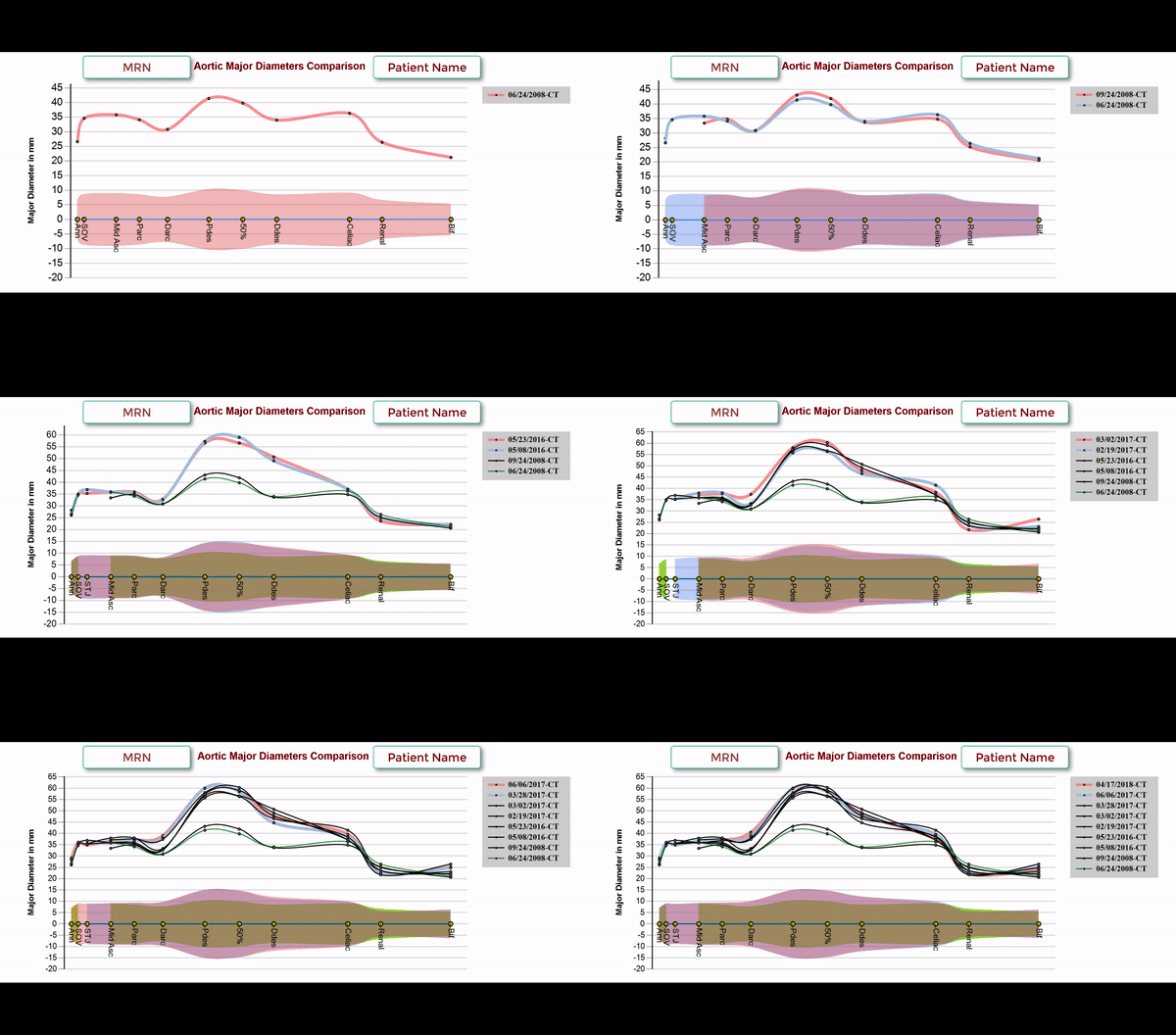
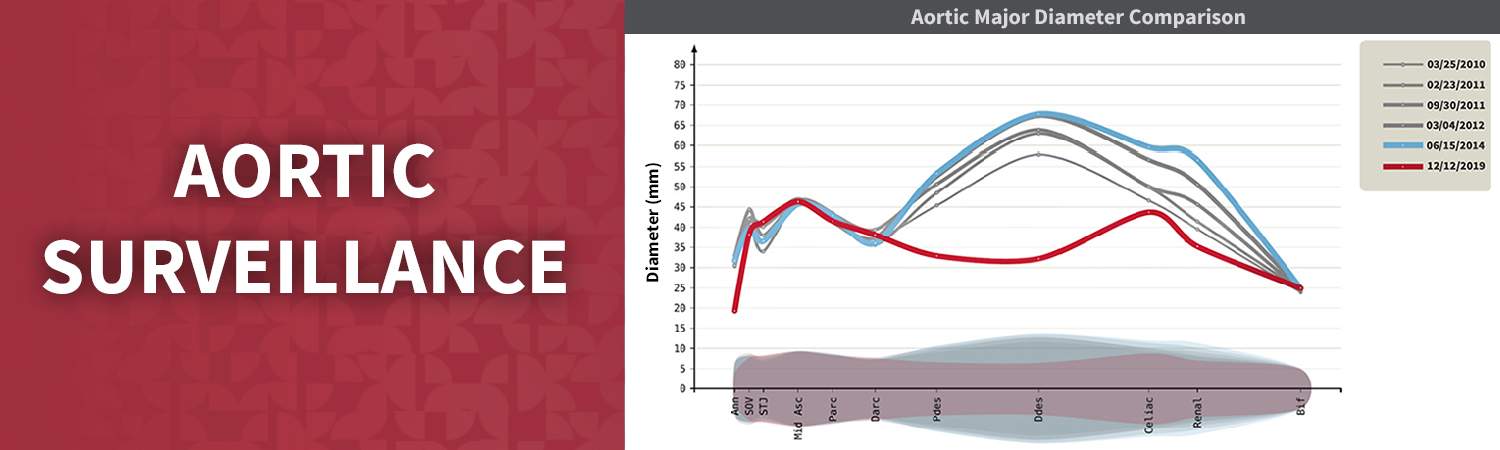
A mechanism was devised to enable the direct importation of measurements from the visualization software into the portal database, thereby mitigating the occurrence of data entry errors and yielding time savings of up to 10 minutes per case. This streamlined process enhances efficiency and accuracy. Furthermore, the collected data can be utilized to automatically generate graphs, facilitating the visualization of aortic diameters over time. The system also allows for the organization of data as customizable reports, affording users the flexibility to selectively include or exclude specific time points based on their preferences and requirements.


Figure B: The standardized measurement locations along the aorta. This standard applies to all studies processed by the 3DQ Lab for aortic surveillance; whether created within or outside Stanford, and regardless if the scan is new or retroactive.
Figure C: Graphs are generated using aortic measurements from each timepoint and are available to view, print, or download by members of the CVS team. These graphs are useful for quickly assessing changes to aortic diameter over time.
Clinical Support
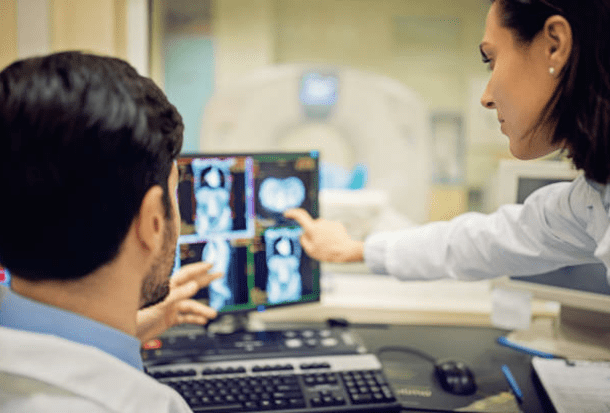
3DQ Lab technologists now sit in the clinic to assist with any imaging questions and on-the-spot measurements during clinic day. They can quickly resolve any queries, and the surgeon can see their patients imaging in an interactive manner by working directly with the technologist.
3DQ Lab – Grant Building
3DQ Lab – Clark Building
Learn More About the Lab
Copyright © Stanford University