CT Calcium Score
Calcium scoring, or coronary artery calcium (CAC) scoring, is a screening process designed to measure and assess the presence of plaque and calcium in the coronary arteries, a condition known as Coronary Artery Disease (CAD). CAD develops as plaque gradually accumulates in the arteries that supply blood to the heart, leading to the narrowing of these arteries and impeding blood flow. If left untreated, CAD can result in symptoms like chest pain and discomfort (angina) or even lead to a heart attack, causing permanent heart damage or potentially fatal outcomes. As the most prevalent form of heart disease in the United States, affecting approximately 1 in 20 adults aged 20 and older, effective screening methods like calcium scoring are recommended for those with risk factors or a family history of CAD.
Figure A (Right): A buildup of plaque in the coronary arteries that is restricting blood flow to the heart muscles.
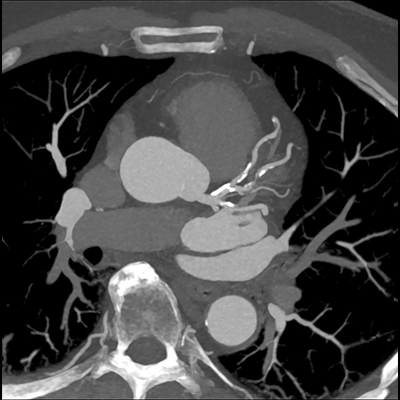

Figure B: A series of CPRs are provided, showing the entire length of the three coronary arteries.

Figure C: Volume reconstructions of the heart muscle, coronary arteries, and multiple calcifications in the arteries.
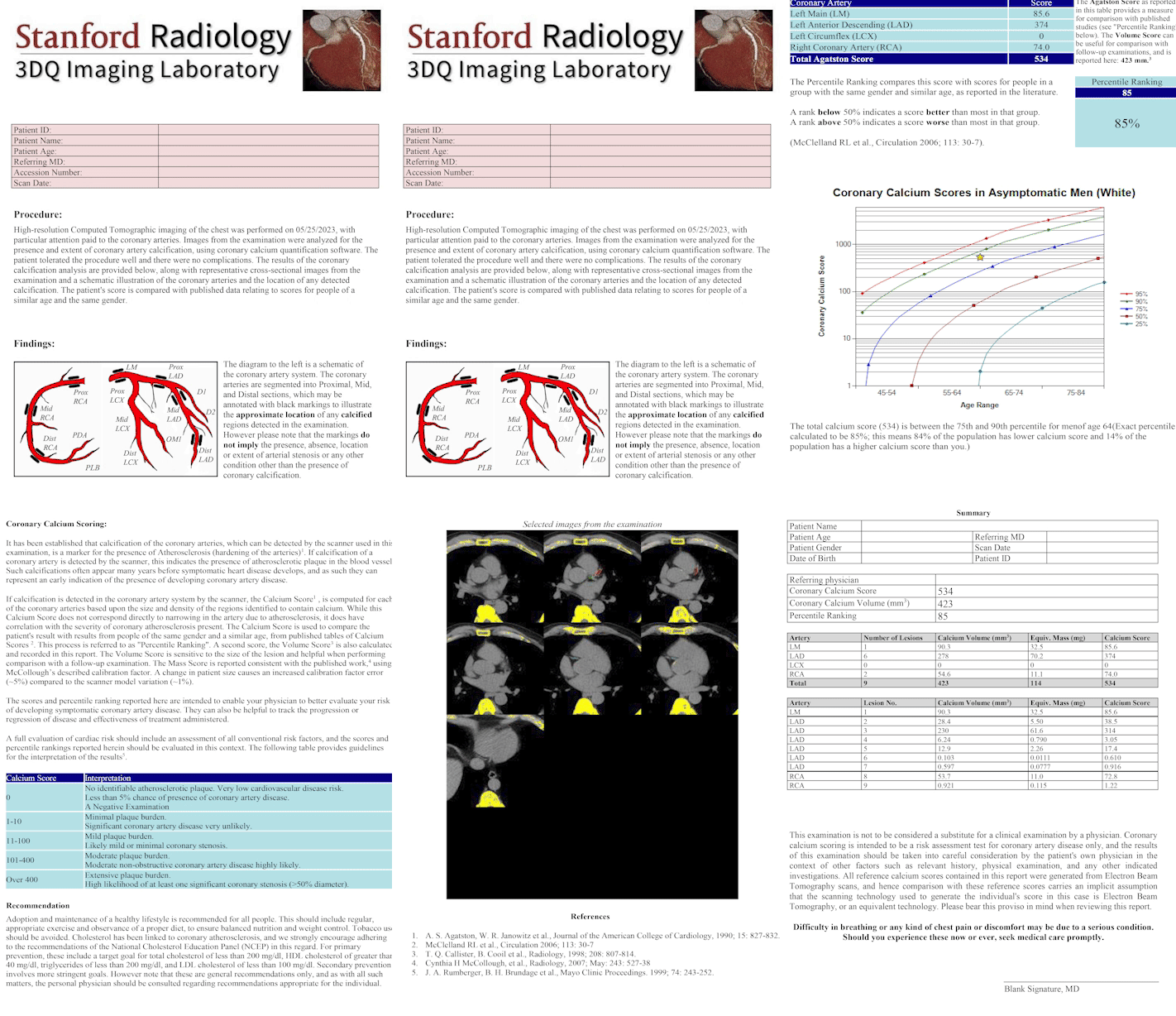
A calcium score, a numerical value representing the total burden of coronary artery calcification, is provided in a report to the involved healthcare professionals along with the images above. A calcium score takes into account the area and density of calcified plaques in the coronary arteries using the Agatston scoring system. Higher scores indicate a greater amount of calcification and a higher risk of developing significant blockages in the coronary arteries. Calcium scores help healthcare providers separate patients into different risk categories and guide appropriate management strategies, including lifestyle modifications, medications, and further diagnostic tests or interventions.
Figure D: Example calcium score report generated by the 3DQ Lab.