
Predicting Bypass Graft Failure
Coronary artery bypass grafting (CABG) is widely used to treat advanced coronary artery disease, but long-term success depends on the durability of the grafts. Saphenous vein grafts are commonly used, yet many develop narrowing or occlusion over time. These changes are often silent and difficult to predict using standard clinical tools.
In this work, patient-specific models derived from CT angiography were used to investigate how blood flow contributes to graft failure. Computational fluid dynamics (CFD) simulations were performed to evaluate hemodynamic forces within each graft, with a focus on wall shear stress, a measure of how blood flow interacts with the vessel wall. By comparing diseased and non-diseased segments within the same patients, the study identified localized regions of low wall shear stress that were more likely to develop stenosis.
Publication Link:PubMed Central
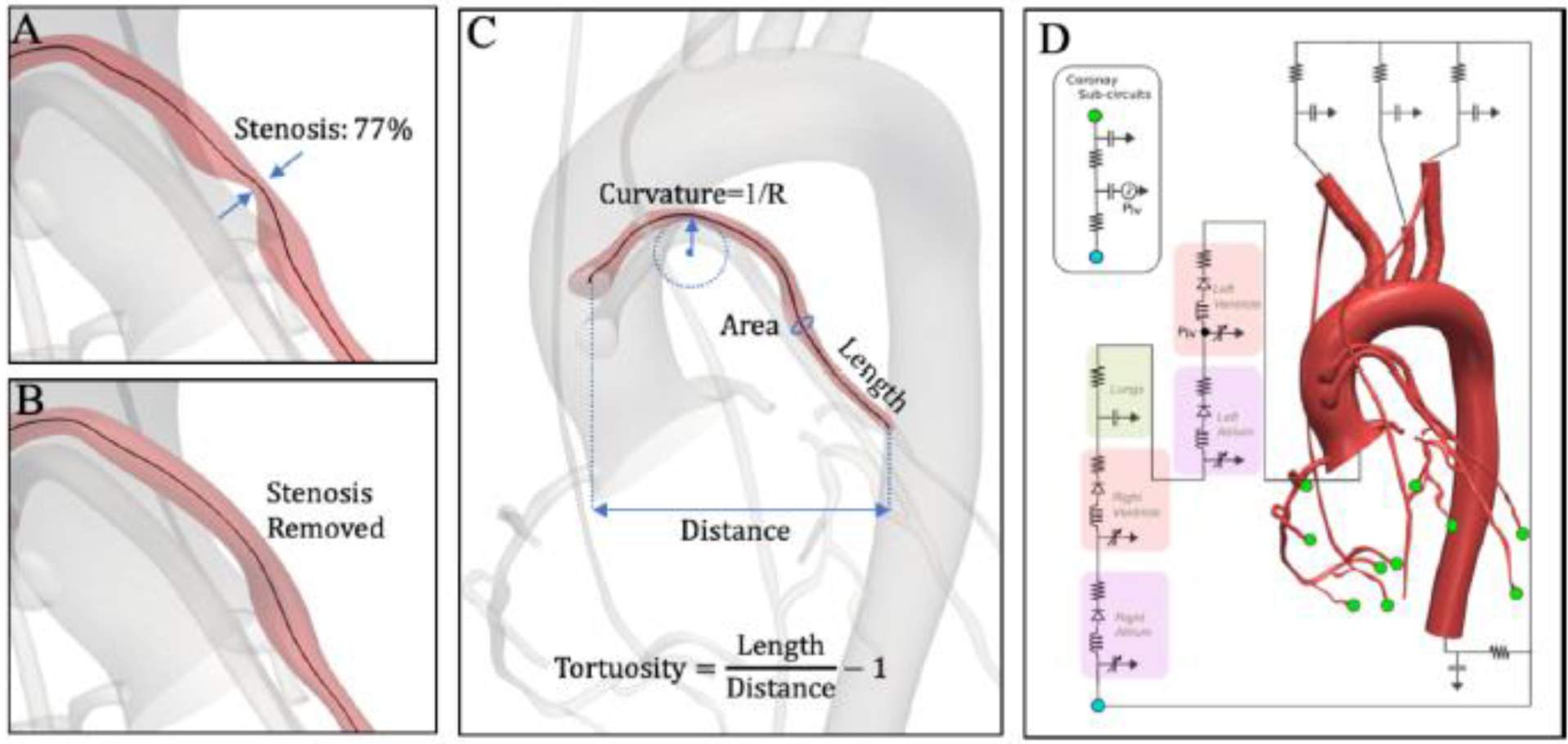
Figure A: Workflow showing CTA-based model reconstruction, stenosis removal, and extraction of anatomical and hemodynamic parameters for computational analysis.
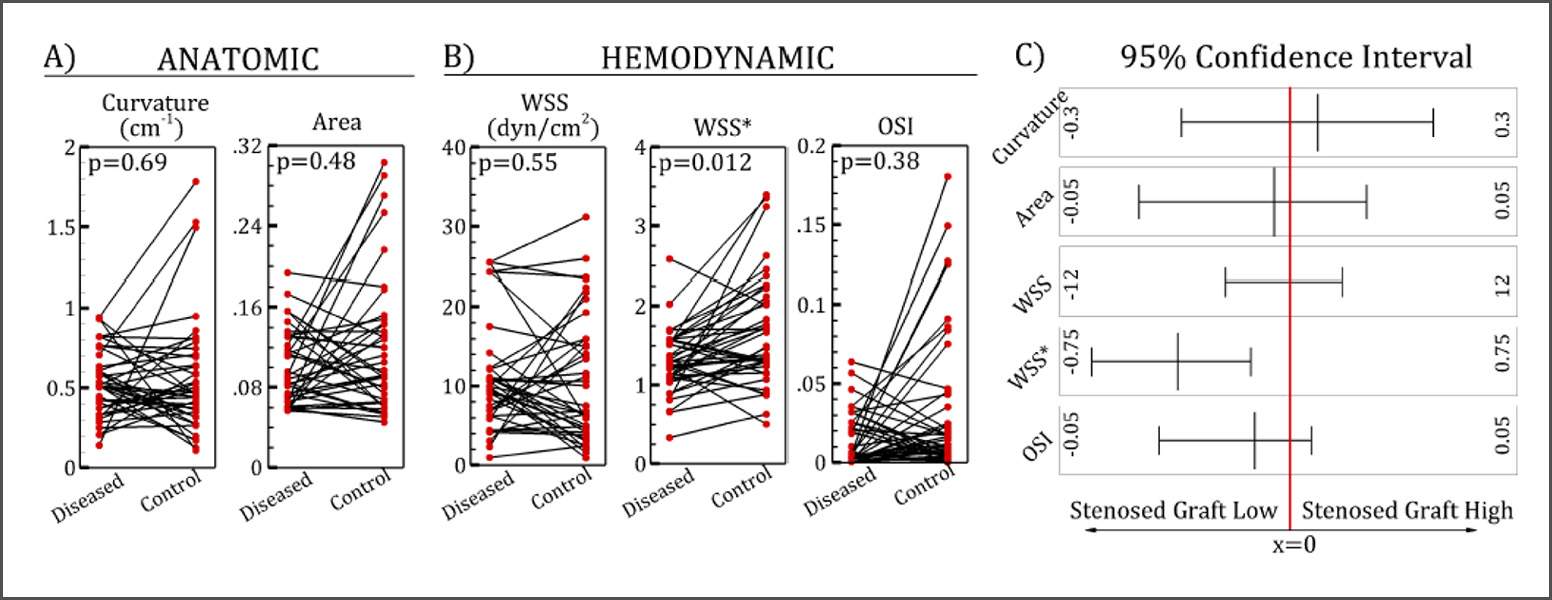
Figure B: Comparison of anatomical and hemodynamic parameters between diseased and control graft segments, including wall shear stress and oscillatory shear index.