Aortic Surveillance Workflow
Collaborators: Stanford Cardiovascular Surgery
Patients with aortic aneurysms and dissections often undergo CT or MRI over many years to monitor changes in aortic size. Because surgical decisions may depend on small changes in diameter, measurements must be performed consistently across time, including when prior studies originate from outside institutions using different imaging protocols.
Before the 3DQ Lab became involved, Cardiovascular Surgery manually tracked measurements in spreadsheets and assembled graphs in PowerPoint. Communication relied heavily on email, and hundreds of outside studies had accumulated on disk without being fully reviewed or measured. This approach was labor intensive and made it difficult to provide timely information for clinic.
Figure A: Workflow diagram illustrating the decision-making process used to receive, process, and report Cardiovascular Surgery imaging requests.
Figure B: Automatically generated longitudinal graph showing aortic diameters at standardized locations across multiple imaging studies.
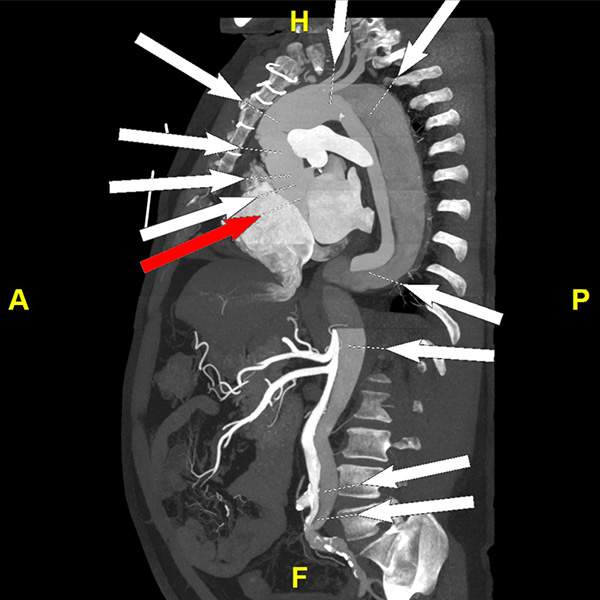
Since 2013, the 3DQ Lab has partnered with Stanford Cardiothoracic Surgery to build a dedicated service infrastructure for measuring and reporting this concept of aortic surveillance. Standardized measurements were defined at standardized locations in the aorta. Any follow-up studies are measured at the same locations as prior imaging. A custom web portal was developed to request studies, prioritize urgent cases, track case status, and deliver results through a single shared interface.
Measurement values are stored in a structured database rather than spreadsheets. The system generates longitudinal reports on demand that include aortic diameters over time. Supporting the graphs are the underlying measurement values and annotated images archived in PACS. These reports are viewed online or downloaded as PDF summaries, providing the Cardiothoracic Surgery team on-demand access to the full measurement history.
The workflow also supports rapid turnaround for prioritized cases, allowing surgeons to review updated measurements immediately before a patient visit – which occasionally occurs just hours after the imaging exam to be evaluated. Every measurement undergoes quality assurance by an experienced technologist to verify image quality, data integrity, and adherence to standardized measurement protocols.
3DQ Lab – Grant Building
3DQ Lab – Clark Building
Learn More About the Lab
Copyright © Stanford University

