Protocol Management
Imaging workflows within the Stanford 3DQ Lab rely on standardized protocols that define how cases are processed for clinicians. These protocols outline the anatomical views, measurements, visualizations, and supporting outputs expected for different clinical services and imaging applications.
To support consistency across the lab, the workflows are maintained across three systems: internal protocol documentation resources, workflow configurations within 3D imaging software, and the lab’s online case tracking portal. Technologists reference these resources during case processing to ensure imaging outputs remain standardized across staff members while still meeting the preferences of different clinical teams.

Protocol development and modifications are driven through ongoing collaboration between the 3DQ Lab, clinical teams, and lab leadership. New protocols are typically developed after meetings with clinicians to evaluate imaging needs, procedural goals, and reporting requirements. Existing workflows are adjusted over time based on clinician feedback, evolving procedural practices, and operational considerations. Larger workflow changes often require leadership review because modifications can affect processing time, staffing needs, and downstream clinical operations.
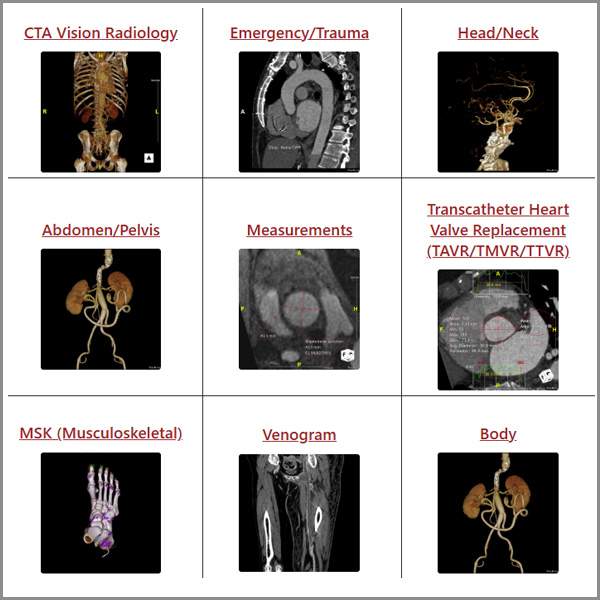
Figure A (Left): Protocol documentation interface used to organize imaging workflows across clinical services.
As protocols evolve, corresponding updates may also be required within the imaging software workflows and online portal elements used to support processing and case management. Lead technologists help manage protocol documentation and web portal configuration, while workflow responsibilities are distributed across multiple staff members to maintain coverage and support on-boarding of new technologists.
3DQ Lab – Grant Building
3DQ Lab – Clark Building
Learn More About the Lab
Copyright © Stanford University
