
Lumbar Puncture Training Models
Coronary artery calcium scoring is commonly used to assess cardiovascular risk by quantifying calcified plaque within the coronary arteries. As imaging volumes continue to increase, automated analysis tools offer the potential to reduce manual effort while maintaining consistent measurements.
The Stanford 3DQ Lab evaluated automated calcium scoring software by comparing its outputs against existing internal measurement workflows. The project focused on determining whether automated assessments could provide results comparable to those generated through established processes while supporting the needs of clinical interpretation.
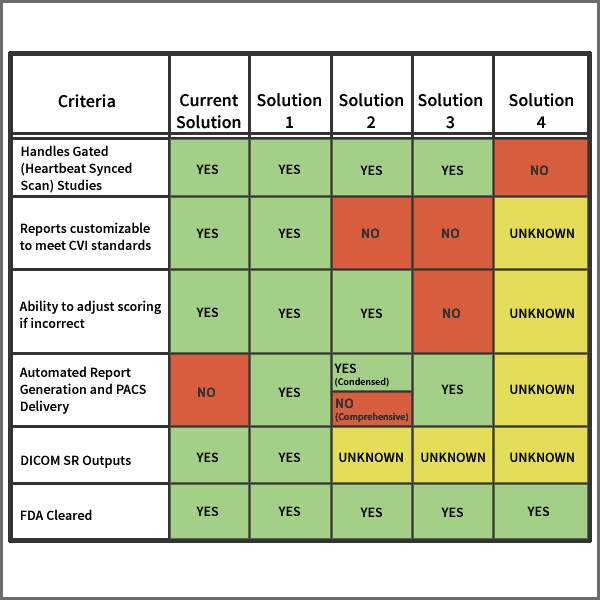
Figure A. Correlation of current calcium scoring solution with automated alternatives based on key criteria, highlighting differences in functionality.
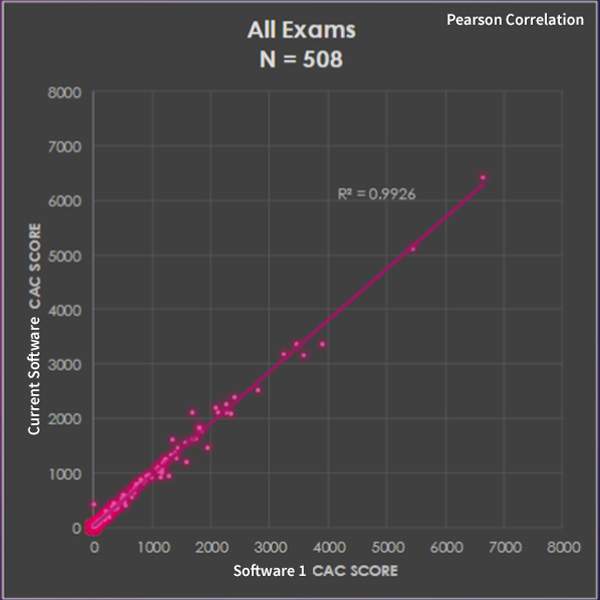
Figure B. Scatter plot showing Pearson correlation between current software and Software 1 calcium scores (R² = 0.9926) from 508 exams, indicating strong agreement.