
The Evolution of Roles in Radiology
In the early days of radiology, the radiologist was a generalist, responsible for nearly every step of the imaging process. When imaging volumes were low, this model was practical. However, the introduction of CT and MRI fundamentally altered this dynamic, creating a data influx that demanded a new approach.
This challenge prompted the first great specialization in modern imaging. The technical task of scan acquisition was delegated to highly trained technologists, a deliberate division of labor that freed radiologists to focus on diagnostic interpretation. History is now repeating itself in the digital domain. The demand for advanced post-processing has created a second wave of specialization for tasks that are foundational to the diagnostic process. This has given rise to the 3D Imaging Technologist.
Following the same proven pattern, this role isolates the highly technical work of image processing, allowing it to become its own discipline. This evolution is not simply about offloading work; it is about creating a dedicated profession that drives quality, efficiency, and innovation by delivering data that is ready for clinical interpretation. This collaborative specialization is the core of the 3D lab model, as illustrated in the workflow for a 3D printed anatomical model below.
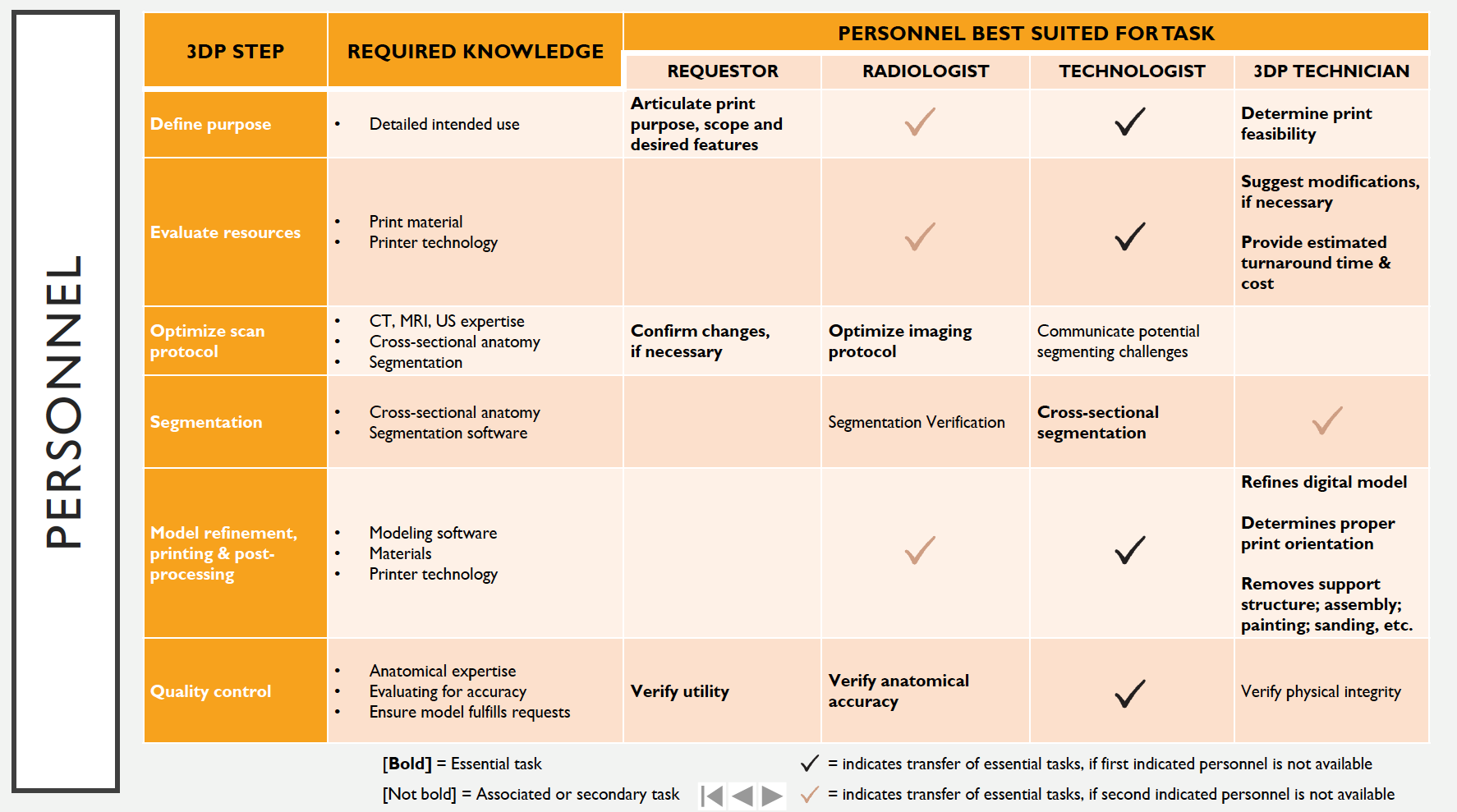
Figure A – Coordinated Workflow. Creating a patient-specific 3D printed model requires a team. The requesting physician defines the purpose, the radiologist optimizes imaging and verifies anatomical accuracy, the technologist performs the segmentation and model refinement, and the 3D technician manages the physical print. This demonstrates the 3D lab model of collaborative specialization in action.
The Purpose of a Centralized 3D Lab
The emergence of the specialized 3D Imaging Technologist naturally led to a new operational structure: the centralized 3D lab. This structure is essential because it transforms advanced post-processing from an ad-hoc, variable task into a standardized, high-quality service. Centralization is the key to ensuring consistency across all studies and streamlining communication between technologists, radiologists, and referring clinicians. It provides a single point of contact for complex requests, ensuring every visualization is precisely tailored to the clinical question at hand.
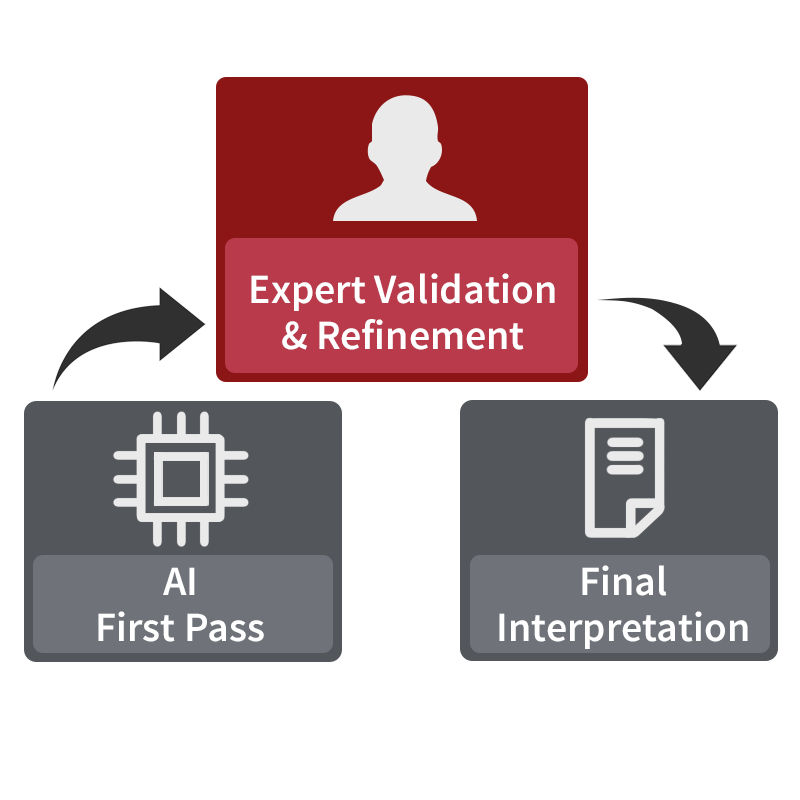
Furthermore, a mature 3D lab serves as the human engine for scalability. While the premise of AI is to scale repeatable tasks through automation, a 3D lab provides intelligent, adaptable scalability for the countless complex cases that fall outside standard algorithms. The lab’s team of experts can tackle unique anatomy, nuanced clinical requests, and unexpected challenges that would confound an automated system. In this role, the lab also becomes the ideal platform for testing, validating, and managing AI tools, ensuring they are safely and effectively integrated into real-world clinical workflows.
Figure B – Human & AI Workflow: The human expert is the essential quality control and refinement step for AI in medicine.
Efficient by Design
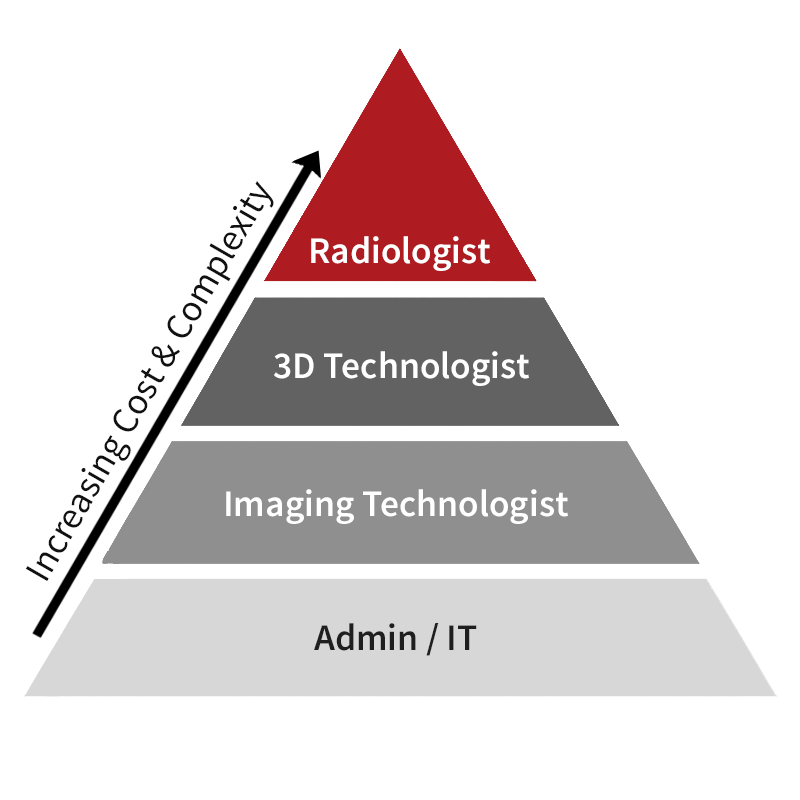
The work performed in a 3D lab is highly technical and foundational to the diagnostic process. It requires deep expertise in cross-sectional anatomy, specialized software platforms, and skills honed by experienced CT and MR technologists. The educational path for a 3D technologist, typically a degree in radiologic sciences followed by clinical certification, is perfectly suited for this work. This stands in powerful contrast to the 13 or more years of medical school, residency, and fellowship required to train a radiologist.
This distinction in training is the foundation of the 3D lab’s economic model, allowing every member of the imaging team to work at the top of their professional license. By assigning these technical preparations to specialized technologists, the model ensures a radiologist’s time is preserved for its highest purpose: diagnosis, consultation, and clinical decision-making. This division of labor, which mirrors the long-established model for scan acquisition, creates tremendous value. The result is a system that can absorb growing imaging volumes cost-effectively, all while safeguarding the time and expertise of its diagnostic physicians for their most critical work.
Figure C – The Value Pyramid: The system is efficient because work is delegated based on complexity and training.
Building the Complete Business Case
The complete business case for a 3D lab rests on two pillars of value: direct, billable revenue and indirect, systemic cost savings. The first is straightforward. Procedures such as post-processing for cardiac and vascular CT is captured through specific CPT codes, providing a clear, tangible revenue source for the department.
The second pillar, indirect value, is often the most significant and is generated when the lab’s clinical impact translates directly into financial dividends. The enhanced anatomical insight from advanced visualization leads to more precise surgical planning, shorter operative times, and fewer procedural complications. This level of consistency is clinically vital for longitudinal studies – such as tracking tumor response or the growth of an aneurysm over years – where even minor variations in processing can lead to incorrect conclusions. Each of these clinical improvements reduces the total cost of care and mitigates risk. This is where the lab proves its worth not as a cost center, but as a cornerstone of a modern, value-based healthcare system.
The evidence of this value is most visible in institutions with strong clinical and surgical specialties. Programs in structural heart (TAVR), oncology (tumor tracking and surgical planning), and complex vascular intervention rely on the daily output of a high-functioning 3D lab.
This strategy of continuous specialization does not end with the 3D technologist. A truly mature lab constantly optimizes by identifying routine tasks that can be delegated further, whether to IT systems for automated case routing or to administrative staff for coordination. This frees the lab’s highly skilled 3D technologists to focus exclusively on complex visualizations and deep clinical collaboration. It is this environment of top-of-license practice and mission-driven work that makes a world-class lab a powerful magnet for talent. Leading radiologists, surgeons, and trainees are drawn to organizations that invest in their success, recognizing a platform that will empower them to do their best work.
Ultimately, while direct reimbursement is important, it is this broad institutional value that provides the most compelling business case for a 3D lab. The efficiencies gained by saving radiologist time, the cost avoidance from improved procedural preparation, and the risk reduction from clearer clinical decision-making are vital components of the value equation. When viewed as a strategic investment in system-wide efficiency and quality, a well-managed 3D lab demonstrates its worth far beyond its direct billings. It becomes an essential component of the clinical enterprise, driving value across the entire patient care journey.
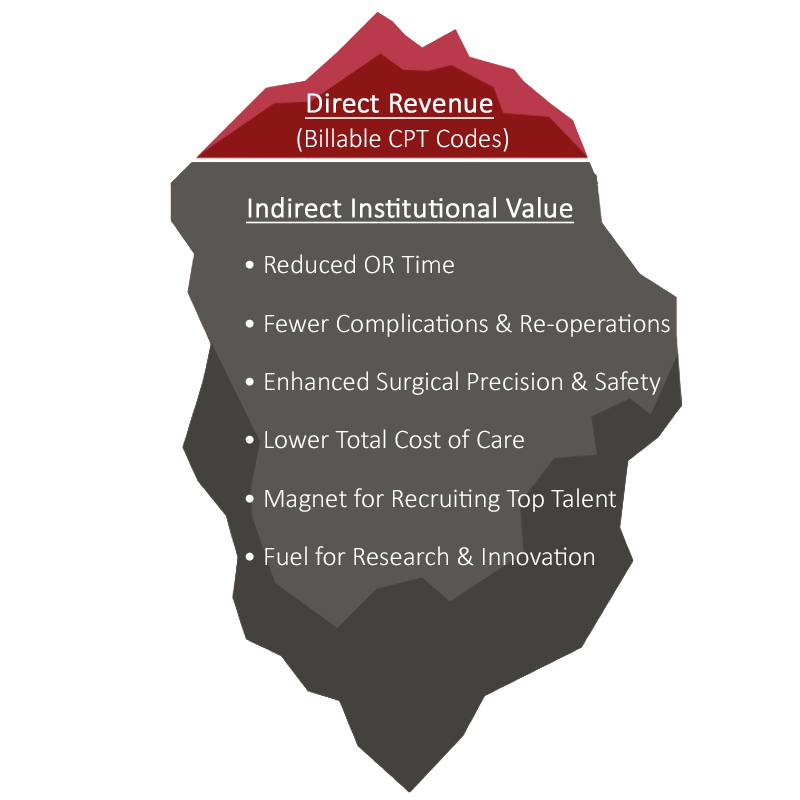
Figure D – Value Iceberg: The lab’s most significant value is not its direct revenue, but the massive hidden institutional benefits it provides.

