
3D Printing for Pediatric Transplant Patient
The experience of heart transplantation can be physically and emotionally overwhelming, especially for children. In addition to adapting to a new heart, patients and families may need help processing the loss of the organ that carried them through childhood. Finding meaningful ways to help patients understand and reflect on that journey can be an important part of recovery.
In this case, a 12-year-old Stanford Children’s patient underwent heart transplantation after developing severe heart failure related to cardiomyopathy. To help commemorate her experience, the 3DQ Lab created a 3D printed model of her original heart, giving her and her family a tangible reminder of her journey through heart failure and transplantation.
Article Link: Stanford Children’s Health
Figure A: Render of the provided 3D printed heart model.
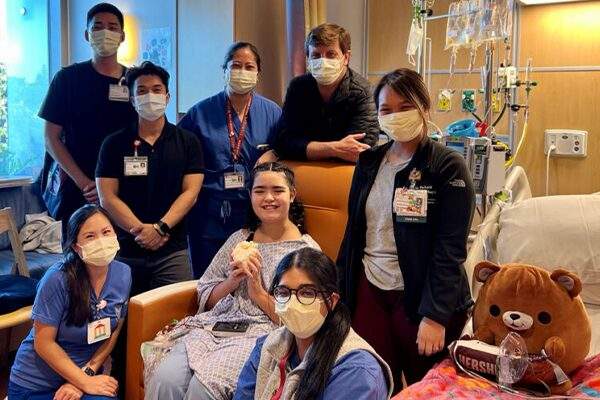
Figure C: Zoë with members of the Stanford Children’s Hospital and 3DQ Lab, holding a 3D printed model of her original heart following transplantation.