
Early Detection of Transplant-Related Lung Injury with CT
Bronchiolitis obliterans syndrome (BOS) is a serious lung complication after hematopoietic cell transplantation that leads to progressive airway obstruction and reduced survival. Diagnosis is typically based on pulmonary function testing, which may only detect disease after significant and often irreversible lung damage has occurred.
The 3DQ Lab contributed by generating quantitative CT outputs to support analysis and clinical interpretation. Four-color quantitative lung visualizations were generated using specialized post-processing software from inspiratory and expiratory CT data, combining multiple quantitative metrics such as air trapping and regional lung deformation into a single, interpretable map. This allowed areas of abnormal lung function to be identified more clearly than with standard grayscale imaging.
Publication Link: ASH Publications
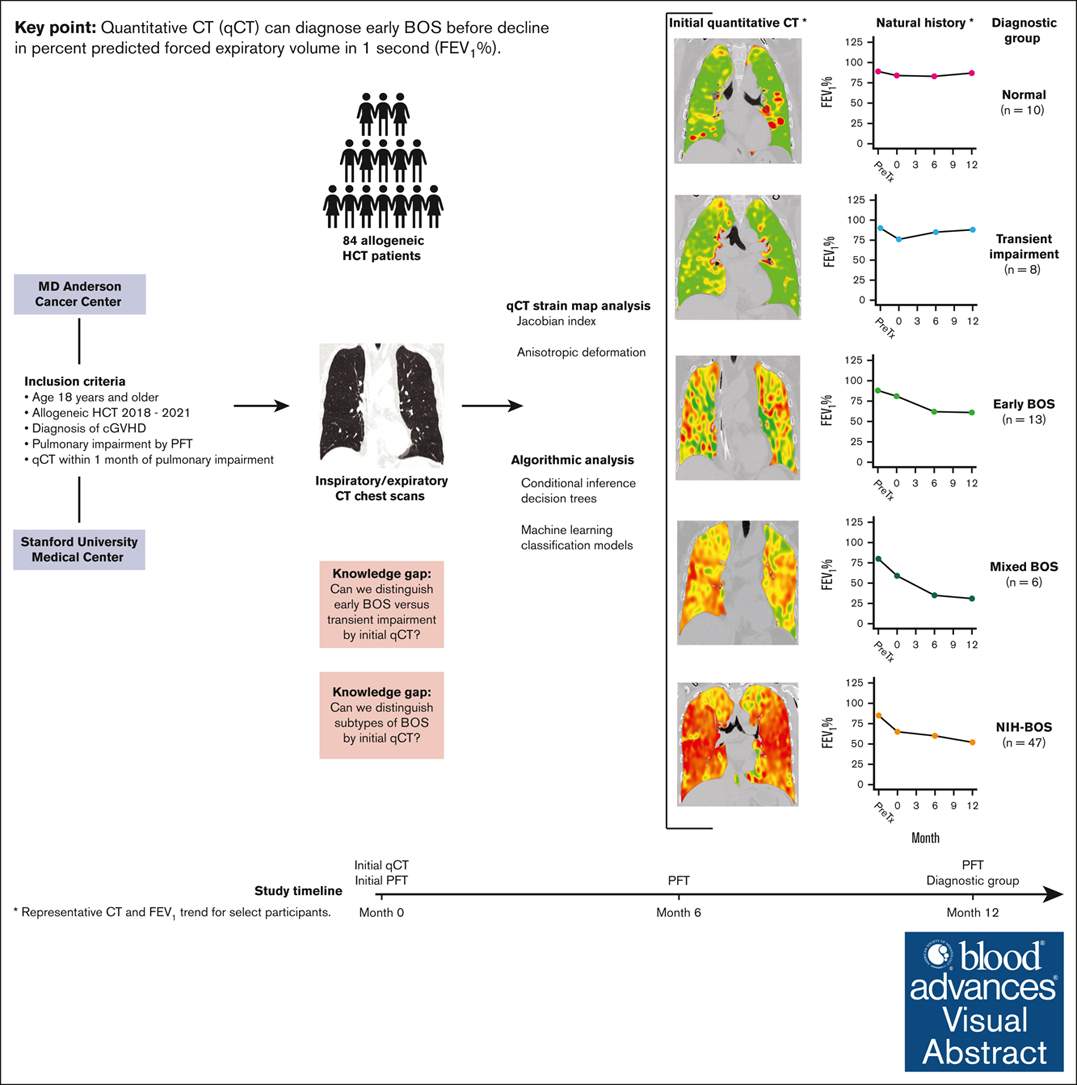
Figure A: Visual abstract from the study illustrating the use of quantitative CT to identify early bronchiolitis obliterans syndrome and differentiate disease subtypes based on imaging-derived metrics.