3D and Quantitative Imaging Laboratory
  • Home
  • Education
    • Education
    • Educational Post Feed
  • Research
    • Research
    • Validation Cohort: Acute Uncomplicated Type-B Aortic Dissection
  • Patient Care
    • Patient Care
    • 3D Printing in Medicine
    • 3DQ Lab TRAC Team (Tumor Response)
  • Case Studies
    • Case Studies
    • Innovation Projects
  • Click to open the search input field Click to open the search input field Search
  • Menu Menu

3D Printing for Pediatric Transplant Patient

Collaborators: Stanford Urology

The experience of heart transplantation can be physically and emotionally overwhelming, especially for children. In addition to adapting to a new heart, patients and families may need help processing the loss of the organ that carried them through childhood. Finding meaningful ways to help patients understand and reflect on that journey can be an important part of recovery.

In this case, a 12-year-old Stanford Children’s patient underwent heart transplantation after developing severe heart failure related to cardiomyopathy. To help commemorate her experience, the 3DQ Lab created a 3D printed model of her original heart, giving her and her family a tangible reminder of her journey through heart failure and transplantation.

Article Link: Stanford Children’s Health

Figure A: Render of the provided 3D printed heart model.
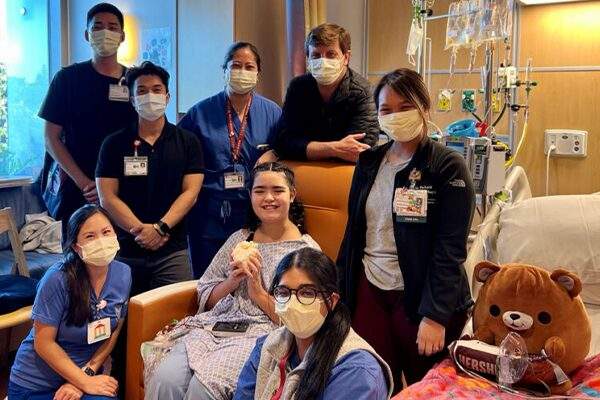
Figure C: Zoë with members of the Stanford Children’s Hospital and 3DQ Lab, holding a 3D printed model of her original heart following transplantation.

The 3DQ Lab created the 3D heart model from Zoë’s clinical imaging data and produced the physical print as a keepsake for the patient. While the lab also supports CT-based donor-recipient heart size matching for transplant planning, this project focused on using 3D printing to provide emotional support during a major life event.

The model became a meaningful reminder of the patient’s resilience and recovery. This project highlights how 3D printing can extend beyond procedural planning to help patients and families connect with their medical journey in a more personal and understandable way.

Categories

  • Head & Neck
  • Chest
  • Abdomen & Pelvis
  • Upper Extremity
  • Lower Extremity
  • Case of the Month
  • Techniques

3DQ Lab – Grant Building

300 Pasteur Drive
Stanford, CA 94305

(650) 725-8432

Directions to Grant

3DQ Lab – Clark Building

318 Campus Drive
Stanford, CA 94305

(650) 725-6862

Directions to Clark

Learn More About the Lab

  • About Us
  • Meet the Team
Search Search

Copyright © Stanford University

© Copyright - 3D and Quantitative Imaging Laboratory - Enfold Theme by Kriesi
  • Link to LinkedIn
  • Link to Instagram
Link to: AI Modeling of Congenital Heart Disease Link to: AI Modeling of Congenital Heart Disease AI Modeling of Congenital Heart Disease Link to: 4D Flow MRI for CTEPH Link to: 4D Flow MRI for CTEPH 4D Flow MRI for CTEPH
Scroll to top Scroll to top Scroll to top