
Surgical Theater Support
Surgical Theater is a virtual and augmented reality platform used by neurosurgeons to review patient-specific 3D scenes for surgical planning and intraoperative reference. Before a case can be used in the platform, imaging data must first be processed by a technologist to build a scene that combines the relevant anatomy, pathology, vessels, tracts, and other structures needed for review.
Historically, this scene-building and case coordination work was supported by vendor representatives. Because these representatives frequently changed roles, the neurosurgical team often had to retrain new staff on imaging preferences, workflows, anatomy, and surgeon-specific needs.
Figure A: Surgical Theater scene demonstrating a patient-specific 3D model prepared by the 3DQ Lab for neurosurgical planning.
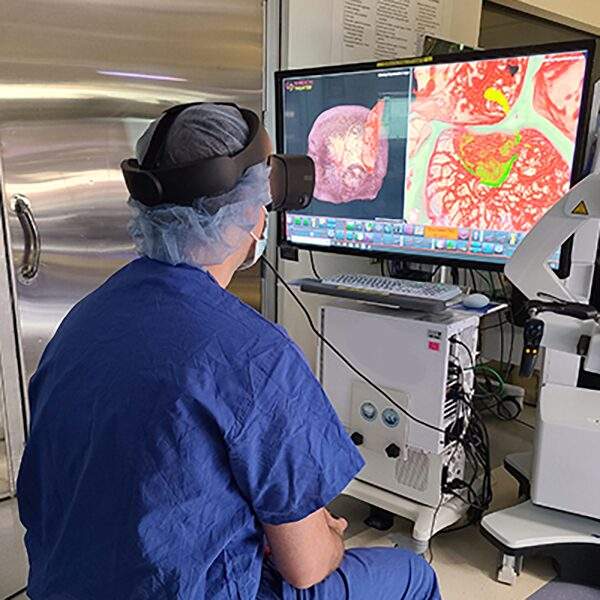
Figure B: Clinician using the Surgical Theater platform to review patient anatomy for case preparation.
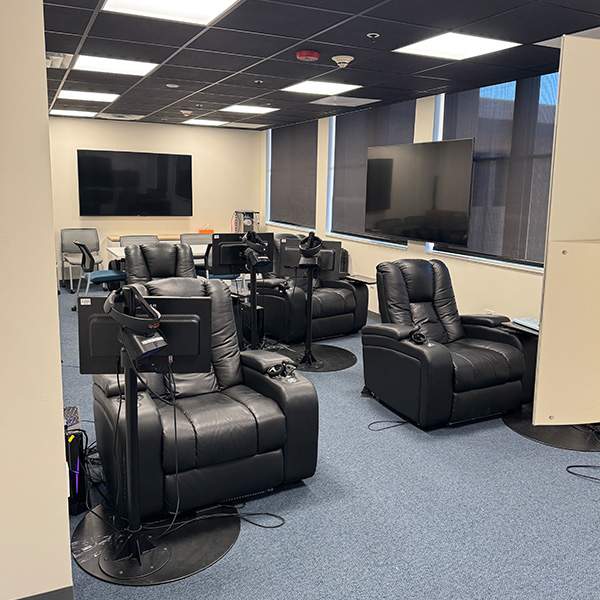
Figure C: Dedicated Surgical Theater VR Studio designed by the 3DQ Lab in collaboration with Neurosurgery.