3D and Quantitative Imaging Laboratory
  • Home
  • Education
    • Education
    • Educational Post Feed
  • Research
    • Research
    • Validation Cohort: Acute Uncomplicated Type-B Aortic Dissection
  • Patient Care
    • Patient Care
    • 3D Printing in Medicine
    • 3DQ Lab TRAC Team (Tumor Response)
  • Case Studies
    • Case Studies
    • Innovation Projects
  • Click to open the search input field Click to open the search input field Search
  • Menu Menu

Project Baseline Imaging

Collaborators: Verily Life Sciences

Project Baseline was a landmark longitudinal study designed to better define what it means to be healthy and to understand how people transition from health to disease over time. Led by Stanford Medicine, Duke University, and Verily Life Sciences, a Google-affiliated company that funded and helped build the study’s technology infrastructure.

One component of the study was coronary artery calcium scoring, a noninvasive CT analysis that measures calcified plaque in the coronary arteries. The resulting Agatston score provides an estimate of coronary atherosclerotic (plaque) burden and can identify early signs of cardiovascular disease, even in people without symptoms.
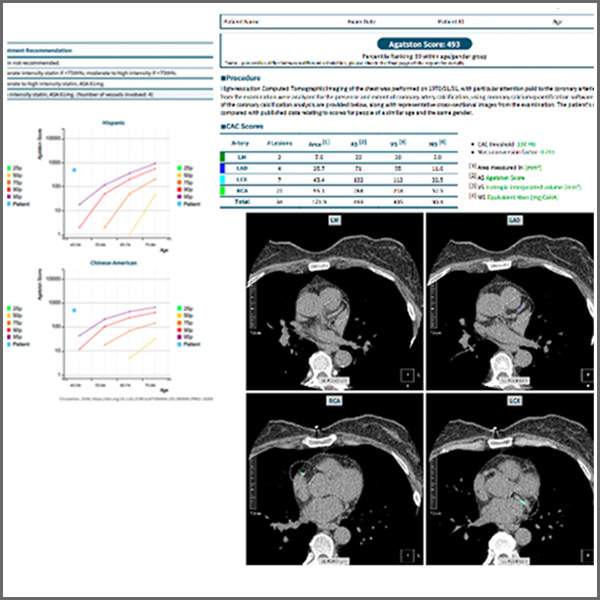
Figure A: Example calcium score report showing the total Agatston score and representative CT images used to identify calcified plaque.
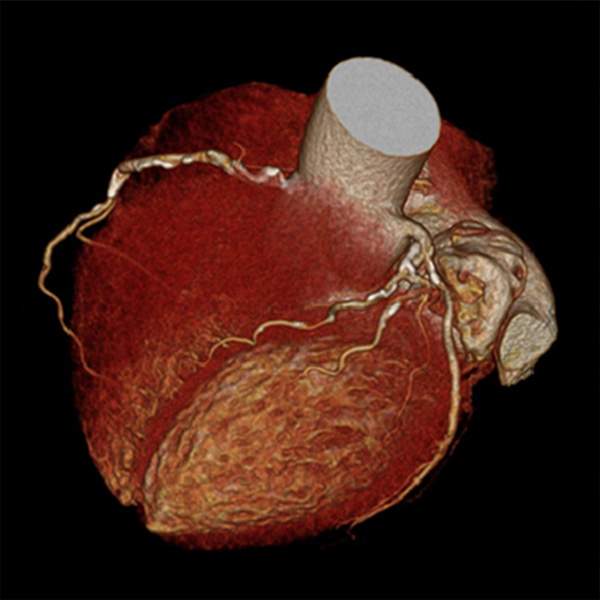
Figure B: 3D volume-rendered image of the heart and coronary arteries, with calcified plaque visible along the coronary vessels.

Between 2017 and 2021, the 3DQ Lab processed more than 1,000 coronary artery calcium scoring studies for Stanford participants enrolled in Project Baseline. Each research study was received through similar channels as routine clinical work,  and analyzed using the same standardized workflow used for Stanford Health Care patients. The 3DQ Lab reviewed each exam, generated the Agatston score and artery-specific breakdown, and prepared the final results for inclusion in the Project Baseline research database.

Project Baseline data continues to be used by researchers studying cardiovascular risk, aging, and early disease detection.

Learn more about calcium scoring in our article here.

Categories

  • Head & Neck
  • Chest
  • Abdomen & Pelvis
  • Upper Extremity
  • Lower Extremity
  • Case of the Month
  • Techniques

3DQ Lab – Grant Building

300 Pasteur Drive
Stanford, CA 94305

(650) 725-8432

Directions to Grant

3DQ Lab – Clark Building

318 Campus Drive
Stanford, CA 94305

(650) 725-6862

Directions to Clark

Learn More About the Lab

  • About Us
  • Meet the Team
Search Search

Copyright © Stanford University

© Copyright - 3D and Quantitative Imaging Laboratory - Enfold Theme by Kriesi
  • Link to LinkedIn
  • Link to Instagram
Link to: Surgical Theater Support Link to: Surgical Theater Support Surgical Theater Support Link to: Automated Extraction of Measurements Link to: Automated Extraction of Measurements Automated Extraction of Measurements
Scroll to top Scroll to top Scroll to top