
Project Baseline Imaging
Project Baseline was a landmark longitudinal study designed to better define what it means to be healthy and to understand how people transition from health to disease over time. Led by Stanford Medicine, Duke University, and Verily Life Sciences, a Google-affiliated company that funded and helped build the study’s technology infrastructure.
One component of the study was coronary artery calcium scoring, a noninvasive CT analysis that measures calcified plaque in the coronary arteries. The resulting Agatston score provides an estimate of coronary atherosclerotic (plaque) burden and can identify early signs of cardiovascular disease, even in people without symptoms.
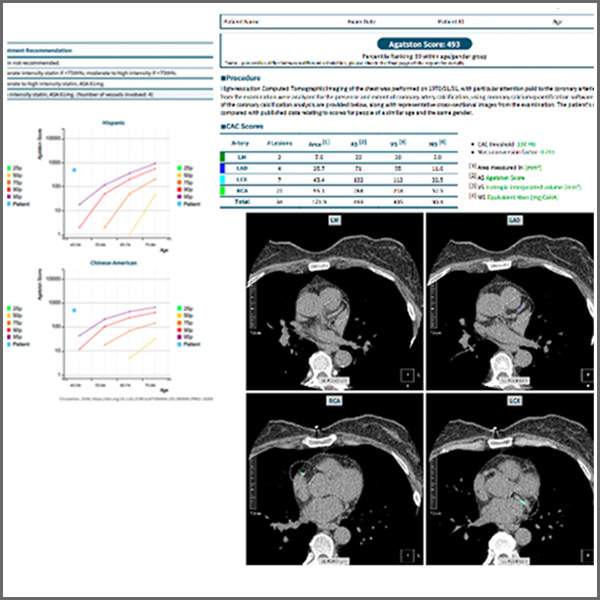
Figure A: Example calcium score report showing the total Agatston score and representative CT images used to identify calcified plaque.
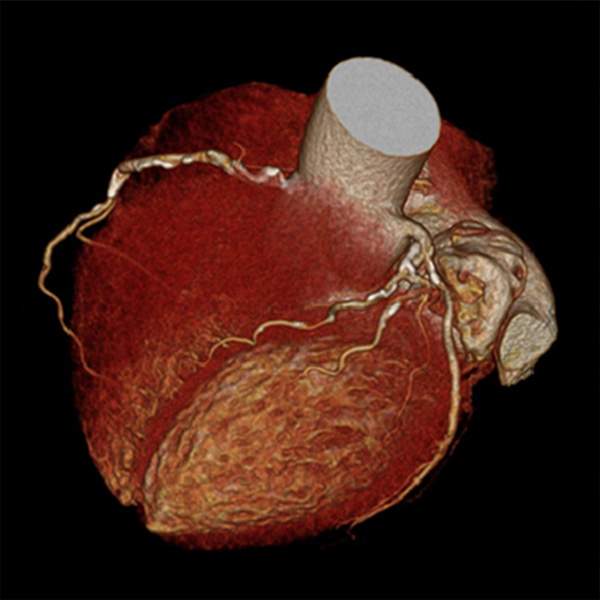
Figure B: 3D volume-rendered image of the heart and coronary arteries, with calcified plaque visible along the coronary vessels.